The Bread Also Rises (Most of the Time)
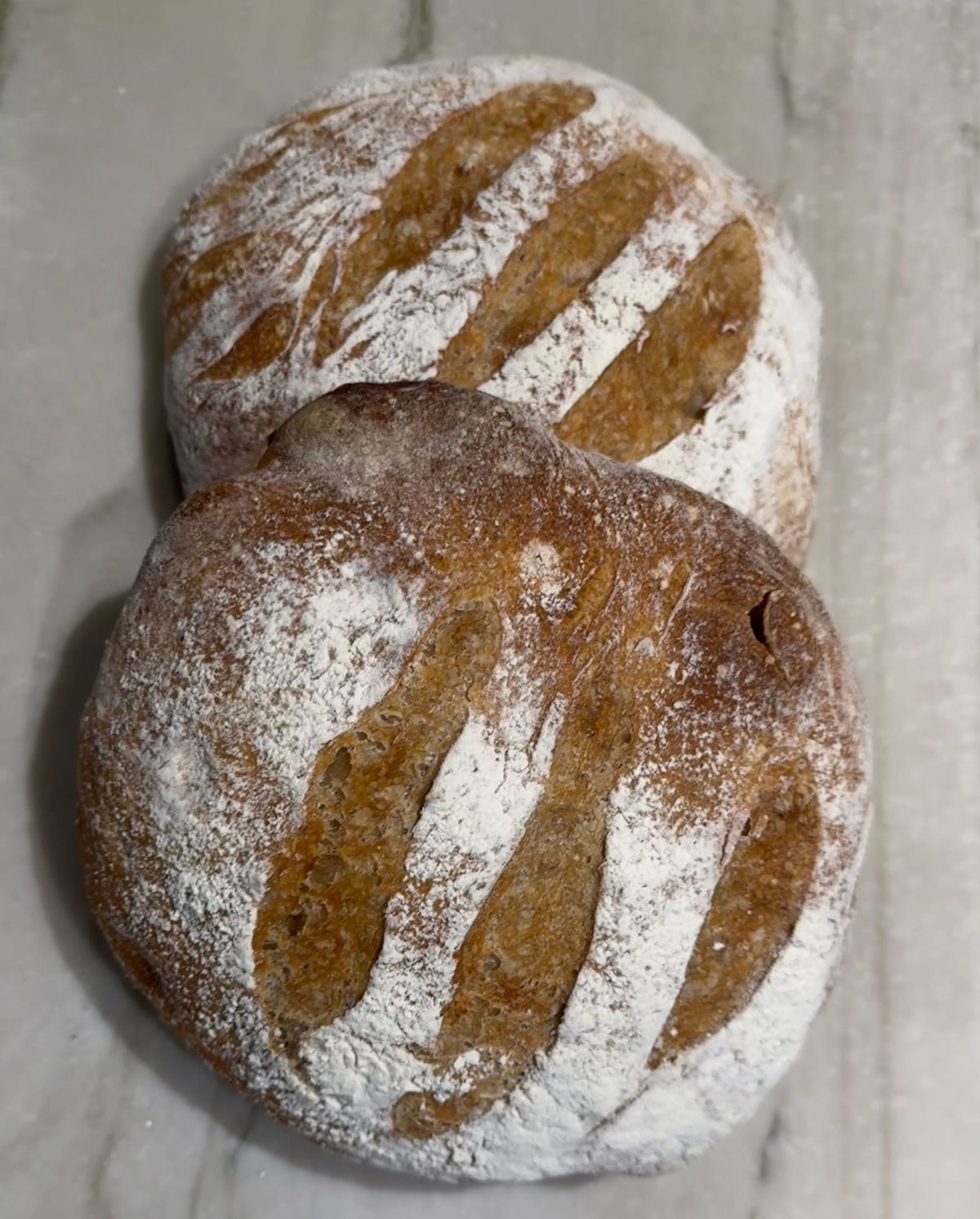
I have been baking bread for almost 50 years. I started with fairly straightforward round loaves leavened with yeast only. About 10 years ago I transitioned to making primarily sourdough loaves. My earliest efforts to create a vigorous starter were hit-or-miss (sorry, Nancy Silverton, but I could never get your starter using grapes to work). I eventually found a reliable recipe that I have used several times when, for one reason or another, my starter died.
Naturally, when we began to spend part of our time in Amsterdam, I wanted to bake bread there. I confronted several challenges, however. First, the apartment where we stayed, as is typical for historic buildings in the area, has single thickness windows and drafty window frames. As a result, the temperature in the apartment from late Fall to late Spring was colder than in our kitchen in the US, so it took longer to create a starter and ferment the dough. That required more advance planning and, if it was a particularly cold day, a pinch of yeast to provide an extra boost.
Second, we had a typical “compact size” Dutch kitchen, in which the oven was about the size of a microwave in the US. Baking more than one loaf at a time was out of the question, as was using a covered pot (which wouldn’t fit). On top of that, it was also a convection oven, requiring some test bakes to settle on the right temperature and timing. On the positive side, it produced loaves with a nice, brown crust.
Finally, I could not find whole wheat and rye flours in our neighborhood grocery stores. However, I found two sources just a short tram ride away. My favorite place is the Baking Lab at Linnaeusstraat 99, a few blocks past Oosterpark. They have a wide range of high-quality flours in big sacks just inside the front door, that you can measure out in the bags provided. In addition, the excellent Hartog Bakery at Wibautstraat 77 also has good whole wheat flour for sale. If you ask at the counter early enough in the day while the bakers are at work, they will also sell you a bag of rye flour from the back of the store.
Baking Lab also has a café that sells delicious prepared foods as well as baked goods for take away or to eat there at breakfast and lunch. They also offer excellent bread baking workshops for various levels of experience. I did a Baking Lab Experience, where you work in the kitchen for five hours and are exposed first-hand to what it is like to work in a commercial bakery. Believe me, no matter how experienced you think you are as a home baker, you will learn a great deal from the Baking Lab Experience. As you know if you are a home bread baker, you sometimes have to make slight adjustments with the measurements and timing for a batch of dough to accommodate temperature and humidity on a particular day, as well as variations in the characteristics of the flour. With experience you learn to sense when the dough is “right”. Nonetheless, sometimes you accept that a loaf will not come out quite the same as the last time. When you are working in a commercial bakery, however, you have to produce a consistent loaf every day. After watching the skill which the workshop staff applied to that challenge, I recognized how much I could still learn.
If you are not a home baker and are not planning to become one any time soon, we can recommend several good bakeries in addition to Baking Lab and Hartog. Bakkerij Wolf in the Nine Streets, Wolvenstraat 22, is excellent. Also check out the bakery vendors on Saturdays at the Noodermarkt.